Search Results
Search this site
231 results found with an empty search
- Exercise : Balance Exercises : Vestibular (Unsteadiness) Training : Part 2
Situation During midsummer period with the "earth tilt reversal" in progress you may be experiencing balance issues that cause an unsteady feeling... This is sometimes described as walking as if you are "on a boat" Targeted vestibular and strengthening exercises can help retrain your brain, muscles, and joints to improve stability. ...oh it can...!... These foundational exercises build the lower body and core strength required for a stable gait. Always ensure your safety by performing these moves near a sturdy wall, kitchen counter, or chair. 1. Single-Leg Stand: i. Stand straight with feet together, holding onto a chair. ii. Lift one leg and hold for 10–30 seconds, then switch. iii. Keep the standing leg slightly bent. 2. Head Movements (Vestibular Training): i. Stand with feet together, back against a wall, and a chair in front of you. ii. While keeping your balance, slowly turn your head up and down 10 times, then side to side 10 times. ... ... Vestibular exercises (or Vestibular Rehabilitation Therapy) are targeted movements designed to reduce dizziness, vertigo, and imbalance by training your brain to adapt to and compensate for inner ear issues. They involve eye, head, and body movements to stimulate the balance system. Always consult a doctor or physical therapist for an accurate diagnosis before starting these exercises, as specific movements depend on your exact condition. 3. Gaze Stabilization Exercises These exercises improve your ability to focus on a stationary object while your head is moving. i. Horizontal: Hold your thumb at arm's length. Keep your eyes locked on your thumb while slowly turning your head from side to side. Repeat 20 times. ii. Vertical: Repeat the process, but move your head slowly up and down while keeping your eyes on your thumb. 4. Cawthorne-Cooksey Exercises A progressive program of exercises (from sitting to standing and walking) designed to help your brain adjust to movement. i. Sitting: While seated, look up and down, then side to side. Next, bend your head forward and backward. Do this slowly at first, then more quickly. ii. Standing: Practice changing from a sitting to a standing position with your eyes open, then with your eyes closed. 5. Brandt-Daroff ExercisesThese are repetitive movements highly effective for treating general dizziness or Benign Paroxysmal Positional Vertigo (BPPV). i. Sit upright on the edge of your bed. ii. Lie down quickly on your left side, turning your head 45 degrees to the right. iii. Stay in this position for 30 seconds, or until the dizziness stops. iv. Sit back up and wait 30 seconds. v. Repeat the entire process by lying down on your right side. ...then... ...that's my/our procedure... ...huhmmm... ... ... ...oh i do un know un more...!...
- Alert : MidSummer Season : Community Security and Safety
HUMAN BALANCE Situation Midsummer Season occurs this month... ... ...it would...!... ...mmmm... ...we'll take our alert... ... ...pffwoah...!... ... Summer Solstice: Saturday, June 20, 2026. - The longest day of the year in the Northern Hemisphere. Midsummer Eve: Friday, June 19, 2026. - This is when the primary, festive celebrations, including traditional dances and maypole gatherings, occur. Midsummer Day: Saturday, June 20, 2026. - Traditionally observed annually on June 24 in the UK and some other regions The Midsummer Myths: i. Fairies awake: Folklore says that on Midsummer’s Eve, fairies and pixies are most active. They use the night to cause mischief. ii. Sunwheels: People traditionally built giant bonfires on hillsides to honor the sun's immense power. iii. Protection: Leaping through the glowing embers of bonfires was believed to cleanse the land, purify the body, and bring good luck and fertility for the rest of the year. ..oh it was...!... ...it is...!!... Many people believe you can magically balance an egg on its end during a solstice (or equinox) because gravity "lines up". This is a fun myth. The gravitational pull of the sun and moon does not change on these days. Find a flat surface: A tiny bit of texture (like a wooden table or a tablecloth) gives the egg a better grip. Use a fresh egg: The yolk needs to settle at the bottom of the shell. Feel for the balance: Gently press the egg down. Let go very slowly. - source: google.com ...you do... ...need a midsummer for that...!... ...so there...!... ... ...a myth...!... ...don't be so easily conned..!... -> NEED to prove myth designations are accurate and not a yearly reality... ...yeah...we do...!... ...mmmn…!... ...oh i can't...!... ...oh not you...!... ...you'rr in... ...and that creed... ...the fairies... ...ohh… … …!... Human Balance Issues - Risk of "vertigo symptoms" while walking in town streets... ...oh more than a risk... ...no more than a risk... ...which...what...!?... ...mmmm... Rebalancing Defenses Look ahead: Focus your eyes on a fixed, stable point on the horizon rather than looking directly at your feet. This helps sync your vision with your brain's balance centers. Use physical support: Pushing an object like a shopping trolley, a bicycle, or using walking poles provides extra tactile feedback to the brain, stabilizing your gait. Seek Vestibular Rehabilitation Therapy (VRT): A specialized physical therapist can teach you "habituation exercises" to retrain your brain and inner ear to work together smoothly...and resets the balance system. Limit triggers: [ ensure balanced intakes of ] caffeine, salt, and alcohol, as these can … affect fluid pressure in your inner ear. Anti-"Human Balance Problems" Drugs ...we'll need our medicines...!... ...mmmm...!.. Vertigo medications (vestibular suppressants) alleviate symptoms of dizziness and nausea but do not cure the underlying condition. They are typically prescribed for short-term use (3–5 days) during sudden flare-ups. Long-term use is generally avoided as it can slow down your brain's natural ability to adapt and recover.The most common medication classes used include: 1. Antihistamines These are the most common first-line treatments. They work by blocking inner-ear signals and depressing labyrinthine function. Meclizine (Antivert, Dramamine Less Drowsy) Dimenhydrinate (Dramamine)Cinnarizine (Commonly prescribed in the UK/Europe for motion sickness and vertigo) Promethazine (Phenergan) - often has stronger sedative effects ...they're new... ...do you know...not...!... ...what...?...this is an outrage...!... ...why wasn't i told...!... ...hah..!... ...huhmm...!... 2. Benzodiazepines These are powerful prescription drugs that slow down central nervous system activity, helping to stop acute vertigo attacks and calm the severe anxiety that often accompanies them. Diazepam (Valium) Lorazepam (Ativan) Clonazepam (Klonopin) 3. Antiemetics (Anti-Nausea )Used specifically to manage the severe nausea and vomiting associated with acute vertigo. Ondansetron (Zofran)Prochlorperazine (Compazine) 4. Cause-Specific Medications Doctors may also prescribe targeted medications based on the root cause of your vertigo: Steroids: Such as prednisone or dexamethasone, to reduce swelling/inflammation in the inner ear. Diuretics: Water pills used to reduce inner-ear fluid pressure in patients with Meniere’s disease. Antibiotics: If vertigo is caused by a bacterial infection. ...if...!... - source: google.com ...i hope we wake up...!... … ….eh good advice... … ...not all..!... ... ...and with that... ...we hope your doing better... ...and about now... ...from all who in...!... ... ...and you...!... ... ...thank you... ...!... -> NEED to monitor risks of fairy groups who may plot mishaps to others during the period of the midsummer season... ...and with that... ...we won't... ...un will... ...oh what... ... ...that..an we can be under hire...by another group... ...a foreign power even...!... ... ...oh we do un know... ...went not...!... ... ...mmmmnnn... ... ...time we did...!... [ kiss! sound ]... ...be our [kiss] off... ...going our separate way[s]... ... ... ...ahhhhhh.... ...!...
- Exercise : Aging Effect on Cognitive and Physical Performance
COGNITIVE AND PHYSICAL Situation Aging naturally affects both cognitive and physical performance, though the brain and body show remarkable adaptability throughout life. While tasks requiring quick processing or raw physical strength often decline, experience-based knowledge and structured routines can remain stable or improve. source: google.com I. Cognitive Performance Age-related changes in the brain do not happen uniformly, meaning some mental abilities decrease while others strengthen. Declines: Tasks that require swift information processing, divided attention, multitasking, and certain types of working memory often become more demanding. Improvements: "Crystallized intelligence"—such as vocabulary, language skills, deep comprehension, and accumulated wisdom—frequently improves with age. Brain Adaptability: The brain retains neuroplasticity across the entire lifespan. New neural connections form, and brain areas specialized for complex decision-making can be bolstered through mental stimulation. II. Physical Performance Physical aging involves gradual reductions in muscle mass, bone density, and aerobic capacity, which ultimately impacts daily function, balance, and agility. Strength & Mobility: Reductions in muscle strength and cardiorespiratory fitness naturally occur over time. However, muscular power—the velocity of movement—is often more predictive of retained physical and cognitive function than raw strength. Slower Reaction Times: Decreases in neural conduction velocity can alter reflexes and swift movements, raising the importance of fall prevention and balance exercises. III. The Mind-Body Connection Research consistently shows that cognitive and physical functions are deeply intertwined. Mutual Decline: New-onset cognitive impairment is recognized as an independent risk factor for deteriorating physical performance. A Cycle of Improvement: Conversely, maintaining good physical function is strongly linked to preserved memory and reasoning skills. Mitigating Factors: Lifestyle interventions can significantly slow age-related decline. Aerobic activity and resistance training enhance cerebral blood flow, promote neurogenesis, and support overall brain health. Actionable Guidelines: Engaging in about 45 to 60 minutes of moderate-intensity exercise, or accumulating roughly 180 minutes per week, has been correlated with clinically significant enhancements in both physical capability and executive cognitive functions. -> NEED to explore specific ways to target these areas, including: Specific brain-training activities to challenge executive function Safe strength and agility exercises for improving mobility Habits and dietary adjustments associated with reducing physical and cognitive decline source: google.com ... ... ...'int will...!... ... ...and i... ...now when am i getting on that... ...in admin... [ daily exercises scheduling ? ] ...mmm... ...when you want... ...it's in... ...and on community... ...in service... ...owhhh...!... ... ...ohhh...!!... ...ohhh...!... ...ohhh...!!...
- Exercise : Information Tampering : Evidence Alteration or Interfering Detection
CRIMINAL EVIDENCE HANDLING Situation Evidence tampering is the act of altering, concealing, or destroying information to interfere with an investigation or court case. In the UK, this is a serious criminal offense known as perverting the course of justice. It can result in severe penalties, including prison time. Evidence integrity ensures that legal decisions are based on accurate, reliable information. Without it, courts cannot rule fairly, the wrong people may be convicted or acquitted, and public trust in the justice system erodes. 1. Common Types of Tampering Physical: Hiding documents, washing away stains, or damaging a physical weapon. I. Digital i. Modifying a file's metadata undocumented file modifications ...you mean like...time...!?... ....mmm... ...the file time... ...or anything other... ...location...of [ file creation ]... ...mmmn... ... ...owhhh...!... ii. deleting emails gaps in the chain of custody iii. editing digital images unexplained changes in format or resolution iv. missing audit logs - unauthorized access or permission changes v. evidence stored outside a secure system ...do...we...!... ... ...pffwoah...!... ...one to watch... ...yeah... ...huhh...how..?... ...get them in shape up...!... ...do...!... ...will... II. Fabrication Creating fake records or submitting false information to mislead an investigation. ...pffwahh...!...we're.../...they're... an easy spot...!!... ...if you say...!?.... ...mmmmn... ...are we/they whit...!... ...uh which... ...mmmn... ...got [my] 10 approval system... ...won't get un caught... ...then un... ...mmmmn... ...owhhh...!... 2. How Tampering is Detected Investigators and courts use specialized tools to verify that information has stayed the same. Cryptographic Hashing: This is a complex math formula that turns data into a unique string of letters and numbers (like a digital fingerprint). If a single comma is changed in the data, the entire fingerprint changes. Audit Trails: Digital systems keep a strict log of who viewed, edited, or moved a file. Unexplained gaps in the log act as red flags. Metadata Analysis: Digital files contain hidden data showing exactly when they were created and last modified. ...do...!... 3. Legal Consequences Tampering undermines the justice system and is treated very strictly. It does not just apply to criminals hiding evidence; everyday people altering emails for court cases can face prosecution. ...it would... ... ... ...mmmm...!.../...hmmmm...!... .... For evidence to be valid in a trial, it must be completely accurate, provable, and free from unexplained changes. ...or what...?... ...inadmissible... ...owhhhh...!?... ... ...what...!... ... ... ...ohh...!... ... ...what then... ...and... ... ...then do... ...call it there... ...will...!... ...mmmn...!... source: www.google.com source: digitalevidence.ai source: GOV.UK Evidence in Criminal Investigations Guide. ...can i beat my de un [ home region revolt ]...!?... ...and get on that...!?.. ... ... ...we're in [from] latvia... [ baltic region, eastern bloc ] ... ...and international... ...in investigators.. ...if we are...!... ... ... ...don't trust... ...we might be in like gang...!... ...and like a thai[land] [ crime ring ] incubator...!... ... ...huhmmm...!... -> NEED to tamper with evidence from a fictitious legal case and have other team members detect what has changed... ...yes... ...we do... ...would...and in [ now ]... ...mmmm...!... ...and we...mmm... ...mmmm../...hmmm...!... ...ahhhh...!.... ... ...oh... I'll give them more than fictitious...!!... source: male experienced anon
- Exercise : Search and Recover Lost Operative
Situation The mathematical formula for finding the total number of shortest paths from one corner of a grid to another (moving only right and up) is calculated using a combinatorics formula: Where: m = the number of steps to the right n = the number of steps up ! = factorial (such as: 4! = 4 x 3 x 2 x 1 ) To get from point A to point B on a standard grid, you must take an exact number of total moves (the shortest route). Grid Examples: A route modelled as a 3 horizontal x 4 vertical mapped street block grid has 35 paths ...aye...!... ...if you/we model as that... ... ...mmmn... ...then...i would...!... ...be in like a jungle with zones... ...be the block size... ...mmmmmn... ...owhh... ...then may be... ... ..then what...!?... -> NEED to drill the patrol to find a lost operative at an unknown location on the map ...owhh...!... ...then how can we find [ them ]...?... … - when the operative is "somewhere on the grid"... … ...owhh…!... ...mmm... .. ...then like in a [ dense ] jungle... [ where operatives are not visible below the canopy from aerial recon ] … ...mmmn… … ...or in [ the ] dark... ...the... ... ... ...on a sequence of [ jungle trail ] paths... ...would be... ...how long to cover them all... ...woooooh…!?… ...mmm... ...may get that in Taiwan... … [ total path number ] ...may be only one or two...[ in right ] ...and one... [ up ]… … ...there could be "any number"...!... ... ...would be 10 and 2... ...we hack... ...and you...!... ... ...wha...!?... … ...don't do it like that... … ...then what...!?… ... ...it won't be [ a ] grid... ...wouldn't do it like that...!...?... ... ...what then...?... ... ...oh naysayer... ...do about give it in...!... ... ...hey...!!... ... ... ...[ it will ] be not unlikely... ...[ that ] we'll get told... ...go find someone lost in the jungle... ... ...mmm... ...on a trail ... ...between point A and B... ... -> NEED to brief the team on the total number of path combinations which have to be searched ...permutations... ... ...do... ...be our map overlay... ...get familiar with the/their terrain... ...do... ...will... -> NEED to estimate the expected time to complete the task and log the actual time required after the task is finished... ...yes... ...then we get wise... ...at estimating... ...and use of time...!... ...mmmmn....!... ... ... ...now... this could take a while... ...you don't get that done in two... ...take more than three... ... ...if that....
- Exercise : WindBreaks - Mini-Depot Setup : Mongolia
Situation Wind speeds across the Mongolian steppe and prairies generally average 4 to 6 m/s (approx. 9 to 13 mph). However, the landscape is heavily exposed, allowing for sudden gusts and seasonal winds that easily exceed 60 mph. Spring is the windiest season, frequently bringing severe, sky-darkening sand and dust storms. source: google.com The wind environment on the Mongolian prairie shifts based on seasonal and geographical factors: Spring (Windiest Period): April and May see the highest consistent averages, often reaching up to 9 m/s. These months are known for "Mongolian cyclones" that stir up severe dust storms and require airport closures. Winter (Harsh & Bitter): Winds during the freezing winter months (which can dip below -25°C in some areas) drive deadly blizzards and tsagaan zud (severe winter storms that kill livestock). Summer (Mild): Breezes become highly welcome during the hot, sunny summers, providing natural relief on the otherwise treeless plains. Regional Differences: The eastern and southern steppe regions generally experience higher, more consistent wind speeds with smaller diurnal variations compared to the western and northern regions. Seasonal Peaks: The highest wind speeds occur in the spring (April and May), driven by the collision of cold Siberian systems and warm southern air. A secondary, weaker peak occurs in late autumn. WindBreaks Setup 1. Cold and Hot Conditions Protection In hot [conditions], windbreaks serve a dual purpose: they block blistering, desiccating winds that strip moisture from soil, and they create cooler, shaded microclimates for your crops or outdoor living spaces. The best approach is to filter the wind rather than block it completely, which prevents turbulent wind tunnels. owhhh…!... [In cold conditions]... as the wind increases, the body is cooled at a faster rate and the skin temperature drops. For example, if the outside temperature is 10°F (-12°C) and the wind speed is 20 miles per hour (32 kilometers per hour), the wind chill is -24°F (-31°C). A windbreak will reduce wind speed for a distance of as much as 30 times the windbreak's height. But for maximum protection, plant your windbreak at a distance from your building of two to five times the mature height of the trees. The best windbreaks block wind close to the ground by using trees and shrubs that have low crowns. Dense evergreen trees and shrubs planted to the north and northwest of the [building] are the most common type of windbreak. ...be in cold...!... ...it's at zero... [ average is zero degrees centrigrade ] ...yeah...!... ...and always in mong... ...and -golia...!... ... ...ehh!ehh!ehh!...and in...!... 2. Trees, Bushes, and Shrubs Often planted together to block or impede wind from ground level to the treetops. Evergreen trees combined with a wall, fence, or earth berm (natural or man-made walls or raised areas of soil) can deflect or lift the wind over the building. source: google.com key strategies to protect a [ building ] from strong winds Additional Considerations: 3. Window and Door Protection: Ensure that windows and doors are securely fastened and well-sealed to prevent wind damage. 4. Roof Maintenance: Regularly inspect and maintain [ the ] roof to ensure it is in good condition and can withstand strong winds. 5. Local Building Codes: Adhere to local building codes and regulations to ensure [ the facility ] is constructed to withstand the specific wind loads in your area. source: facebook.com -> NEED to set windbreaks around all mini-depots to minimise exposure to dehydration, chill, hyperthermia, pressure oscillations, instability. ...aye... ...mmmm... ... ...yeah... ...but when and why... ... - then... are they withholding other briefings from you ? - may be feminists or chinese agents ! - it's the mongolian metals exports industry anti-corruption mission ...owhh... ...may...!... ... ...whatever... - source: female experienced
- Exercise : Visual Acuity Optimization
Situation VISUAL GLARE To measure outdoor glare caused by summer insolation (solar radiation and bright reflections), the most widely used methods utilize Luminance (cd/m²) and Illuminance (lux). Veiling glare is an optical phenomenon in which stray light scatters across the retina, superimposing a "veil" of luminance over the image you are viewing. It dramatically reduces contrast, making it difficult to distinguish subtle details or read objects located near bright light sources. ...what... ...it's that...!... ...if you say... .. ... ...now that would affect while i'm driving... ...mmm...!... ... ...and in shooting... ...duh... ... ...and in reconnaissance.. ...mmmn... -> NEED to assess visual capabilities and limitations against the operating climate during each season. ...it can be [in summer] bedazzled... ...and then un...!... ... ...it can... … ...mmmm… Sharp shooter vision systems encompass specialized eye examinations and training apparatuses designed to for markspersons : - optimize visual acuity - depth perception - cross-eye dominance Because traditional sight pictures rely heavily on exact visual alignment, these systems combine optometric tests with visual performance training. 1. Eye Dominance Testing: Determines whether your brain relies more heavily on the left or right eye, which is vital for preventing cross-eye aiming errors. 2. Contrast & Color Sensitivity: Tests your ability to distinguish targets (such as clay pigeons) against complex backgrounds. 3. Dynamic Visual Acuity: Evaluates your eyes’ ability to focus clearly on fast-moving targets. 4. Vitamin Deficiency Tests: # Eye Overheating ...would it be outdoor...?... ...would...!... ...mmm... High temperature can cause the tear film of the eye to evaporate quickly, resulting in dry eye symptoms, including redness, irritation, burning sensation, and tearing. # Eye Allergies High temperatures and high levels of irritants and pollutants in the air increase the risk of eye allergies. Burning eyes are primarily caused by severe dry eye syndrome, which can be exacerbated by deficiencies in key nutrients like : i. Vitamin A ii. Vitamin B12 iii. Vitamin D iv. Omega-3 fatty acids These vitamins and fatty acids support tear production, lubrication, and corneal health. 5. Stinging or Sore Eyes [for] quick relief from stinging eyes you can try: Rinsing your eyes with lukewarm water: Rinsing your eyes with water can remove any allergens or irritants that cause the burning sensation in your eyes, and this may help reduce any dryness or inflammation. Creating a warm compress: Soaking a cloth in warm water and then applying the warm compress over your eyes for a few minutes a day can also reduce burning. Staying hydrated: Drinking more water can increase eye moisture and reduce dry eyes – another cause of stinging and irritation. Another way of increasing moisture is by running a humidifier, as this boosts moisture in the air which prevents dry burning eyes. Reducing screen time: Due to the pandemic and online study/working from home becoming more common, the time we spend staring at screens every day has increased, and this could lead to digital eye strain. Reducing how long you spend looking at screens could prevent irritation and burning. - source: optimax.co.uk Contact lens wearers with allergies should speak with their GP about the best way to alleviate the symptoms, including special eye drops and over-the-counter antihistamines. If you suffer from dry eye syndrome and this results in frequent discomfort: - lubricating eye drops - applying a cold or warm compress - artificial tears … … If your stinging eyes are consistent, and you start to experience - blurred vision - pain - flashes of light - double vision - excessive light sensitivity it's essential to reach out to your GP. - source: visiondirect.co.uk ...oh... ...and done... ...mmm...
- Alert : Outdoor Conditions : Eyestrain Risks Elevated
EYE-STRAIN Acute Effects (Short-Term Exposure) Photokeratitis is essentially a painful "sunburn" of the cornea caused by excessive ultraviolet (UV) radiation. Concrete, white-painted surfaces, and untreated windows can significantly increase your risk of this condition by reflecting or transmitting damaging UVA and UVB rays into your eyes. How These Elements Cause Eye Damage Concrete Surfaces: Concrete, cement, and white sand act like highly reflective mirrors for UV light. While you might be shielded from direct sunlight, UV rays can bounce off concrete walls and pavement and go directly into your eyes, dramatically increasing your total UV exposure. Untinted Glass Windows: Standard glass windows generally block most UVB rays, but they allow a significant amount of UVA rays to pass through. If you are sitting near a window in a room with direct sunlight, or inside a vehicle, the reflected and transmitted UV rays can still damage your corneal surface over time. Common Symptoms The symptoms of photokeratitis usually appear 6 to 12 hours after exposure and can last anywhere from 6 to 48 hours. They include: Intense eye pain and a gritty, "sand-in-the-eye" feeling. Extreme sensitivity to light (photophobia). Excessive tearing, redness, and swollen eyelids. Blurry vision. Prevention & Recovery Preventing Exposure: The best way to prevent the condition is by wearing sunglasses labeled "UV400" or "100% UV Protection" whenever you are near reflective surfaces or un-tinted windows. Recovery: Because photokeratitis causes temporary damage to the outer layer of the cornea, it typically heals on its own within a few days. To soothe discomfort while your eyes heal, rest them in a dark room, use over-the-counter pain relievers, and apply preservative-free artificial tears. Do not rub your eyes or wear contact lenses. If your pain is severe, vision remains blurred, or symptoms do not improve within two to three days, you should consult an eye doctor (optometrist or ophthalmologist). You can find local healthcare providers or eye specialists using the NHS Service Finder or the Opticians Directory to book a checkup. source: google.com -> NEED to use standard methods to assess average human "eyestrain" risks each day and month.. ...yes..!... ...mmm... ...uhhh.. Outdoor sensors that detect ambient light levels and measure your daily exposure to natural sunlight. Apps use the phone's front-facing ambient light sensor. [ others : Lux Light Meter Pro (iOS) or Light Meter (Android) ] Outdoor tip: Bright reflected daylight can saturate the sensor. You can prevent readings from maxing out or erroring by taping a thin diffuser, such as a single sheet of standard white paper, over your light sensor. source: google.com ... ...fair enough...!... While eye strain is mostly associated with indoor screens, outdoor conditions can also cause fatigue due to: - harsh glare - wind - UV To mitigate the effects of outdoor conditions and avoid eyestrain, consider these key recommendations: Manage UV and Glare: Wear polarized sunglasses to protect your eyes from the sun's reflective rays on water or pavement. Filter Blue Light: If you are using a digital device while outdoors, enable nighttime mode or use light sensitivity glasses to cut down on harsh wavelengths. Prevent Dryness: Prolonged exposure to wind or dust can dry out your eyes. Use lubricating eye drops if needed. Leverage Natural Light: Spending time outside can trigger the release of dopamine in the retina, helping to prevent nearsightedness and naturally supporting overall eye health. Other Impacts may affect wearable devices (like smart glasses or a smartwatch) may be affected by: specific outdoor conditions (e.g., bright sunlight, wind, or dry air) to track or counteract. source: google.com
- Exercise : Ratio of Farms Production to Population Numbers - Verify Farm Outputs per 1000 people
...then do... ...if you can... ...mmm... ...huh... ...need our "food insecurity"... ... un... ...and un... ...un... Globally, there are roughly 650 million farms serving a population of 8 billion people, equating to about 81 farms per 1,000 people. source: google.com However, this varies widely by region. In the UK, with around 216,000 farm holdings and a population of 68 million, the ratio is much lower at about 3 farms per 1,000 people. The relationship between farm numbers, food production, and population sizes depends heavily on economic development and farm sizes. Here are the key distinctions: Global Divide: Over 80% of the world’s farms operate on less than 2 hectares, largely situated in developing nations. In these regions, a higher number of farms per 1,000 people exists, but often with lower labor productivity per capita. Industrialized Nations: High-income regions (like the UK, US, and EU) tend to have larger, highly specialized commercial farms. Fewer farms per 1,000 people generate a much higher gross output, utilizing advanced mechanization and technology to support a larger non-farming population. To explore how these metrics look for specific regions, you can check the Our World in Data on Farm Size and Productivity for regional breakdowns, or view UK Government Farming Statistics for local holding and productivity data. source: google.com DARKER COLORS = LARGER FARMS ...owhh...!...` ...look why russia?... ... ...no data...!.. - nor ukraine ...nor many...!... ...mmm... ... ...then get... ...and on the/their record... ..."the"... ... ...will... ...and i... ... ... ...now that could be our big in one... ...how to stat that... ... ...mmm... ...it is...!... ...ahh... -> NEED to assess unofficial farms in russia that may be supplying the chinese army with food products off the UN record... ...may...!... ...and it ain't unknown... ...from un jap un... ...and in un them... ...un... source: male japan division ...mmm... ... ...then may...!... source: male experienced american division ...mmm... ... ...mmmhuhh...!!... ... -> NEED to assess ratio of livestock ranches to crop farms in each zone... ...and [those] in combo... ...any...!?... ...any not...!?... ...which...!?... .... ...owhhh... ... [ klump! - boots to attention ! ] ...in my final... ...and marque... ... ...owhhh... ... ...now that may be my... ...N.../...end... ...and in un un... ... ...pffwah...!..?.... ... ...do know not...!... ... ...do be careful on that...!... ...there is more than... china.../...chine... [ can be also unofficial german in farms out there ?] ...mmm... ...and... ... ...mmmm...!... ... ...then we're in... ...and they're scary... ... ...!... source: antipodean female ...mmm... ... ...mmm... ... ...hmmm... ...don't let them in un fear... ...and un... source: all-africa male ...mmm... -> NEED to use monthly and yearly farm stats updates to verify food supply security within each territorial zone... ...we will..!... ... ...yep... ... ...and in... ...and done... ...mmmm... ... ... ...why don't you mind your own business...!??... ... ...and expect that...!... ... ...do... ... ...ohh...
- Exercise : Monitoring Violations of Human Trafficking and Border Control
...uh we will... ... ...i'd keep them a separate issue... ...better in the same... ....which...?... ... https://stopthetraffik.org/ Human trafficking remains a highly prevalent global issue, with labor exploitation and sex work as the primary drivers, while forced criminality in online financial scams has rapidly surged as a major new threat. Criminal networks are increasingly using fraudulent job ads abroad to trap victims in illicit [ remote fraud gang ] compounds. source: google.com ...i can be in both... [ labor exploitation and sex work ] ...mmmm... ...owhh...!... ... ...no diff... ... ...is...!... ... ...owhhh... ... ... Border control manages the movement of people, animals, and goods across national borders. Its primary purpose is to safeguard national security, enforce customs and immigration laws, and protect public health and biosecurity. The key purposes and gains of border control include: National Security & Crime Prevention: Intercepting terrorists, preventing the smuggling of weapons and drugs, and identifying fugitives or individuals of interest before they enter a country. Immigration Management: Regulating the flow of legal migration, processing asylum claims, and detecting fraudulent travel documents or cases of human trafficking and modern slavery. Biosecurity & Health Protection: Enforcing sanitary and phytosanitary regulations to prevent the spread of infectious diseases, pests, and harmful agricultural products that could endanger human, animal, or plant health. Economic Prosperity & Revenue Collection: Facilitating the smooth flow of legitimate travel and international trade while assessing, protecting, and collecting customs duties and taxes. Public Order & Safety: Reducing transnational and local crime to ensure border communities remain safe and stable. source: google.com Countries continuously update their strategies—such as the UK's integration of the Border Security Command to combat people-smuggling or the implementation of AI-driven systems to boost detection capabilities—to balance security needs with the desire for frictionless trade and tourism. British authorities continue to coordinate with international partners to dismantle trafficking and modern slavery networks operating across borders. Reporting & Support Resources If you suspect or have witnessed human trafficking, you should never intervene directly. Immediate assistance and localized resources are available: UK: Call the modern slavery and exploitation helpline on 08000 121 700 or report an emergency to the police on 999. You can view more guidance on the UK Government Modern Slavery pages. Global: Locate localized victim services or report an incident through the UNODC Human Trafficking network. -> NEED to support monthly monitoring and observations which will assist in dismantling of trafficking and modern slavery networks operating across borders... ...we will.. ...when the ozone not in high and higher...!... ... ...uh even if...!... ... ...wha... ...then i need my crack...!... ... ...then do... ...get on top... ...of all and that...!... ... ...hmmm...only a bit... ...uh... ..got it in low... ...but do we monitor... ...mmm... ... ...it's in like us and un... ...identity theft... ...may be connected...!... ...would...!.. ...euuugh... ...then perform their connections... ...who is offering an id on the public market... ...mmm... ...be we... ...are... ...ohhh... ... ...will... ...and done... ...mmmm...
- Exercise : Mechanism of Exhaustion in Perimeter Guards
Situation Exhaustion in perimeter guards creates severe cognitive reductions. Within 20 to 30 minutes of static monitoring, a guard's attention can drop by up to (85%). Extreme cognitive fatigue impairs: - situational awareness - memory - reaction times ...leaving facilities vulnerable to physical breaches. The combination of fatigue and monotonous monitoring environments triggers distinct cognitive failures: 1. Alert Desensitization (Alert Fatigue) What it is: When monitoring systems trigger repetitive false alarms, guards become desensitized and may ignore or fail to respond to genuine threats. Cognitive mechanism: Constantly processing alerts causes decision fatigue and depletes essential neurotransmitters (e.g., dopamine). Guards exploit familiar, easy cognitive templates rather than thoroughly analyzing complex anomalies. 2. Vigilance Decrement & Tunnel Vision What it is: A continuous decline in the ability to detect faint or infrequent signals over a prolonged period. Cognitive mechanism: Extended task durations worsen the brain's ability to divide attention. Guards may experience perceptual distortion, such as tunnel vision, causing them to miss movements at the far edges of their perimeter. 3. Slower Processing and Executive Dysfunction What it is: Delayed reaction times and an inability to adapt to fast-moving crisis scenarios. Cognitive mechanism: Sleep deprivation and circadian disruption impair the brain's executive functioning and working memory. Guards under high cognitive loads take longer to differentiate authorized personnel from intruders. 4. Overload and Complacency What it is: In low-threat environments, guards can develop a false sense of security, reducing their physical scanning and patrol routines. Cognitive mechanism: This psychological adaptation reduces threat detection capabilities by up to (60%). How to Mitigate Cognitive Reduction Security operators can deploy several strategies to counteract these cognitive deficits: Task Rotation: Rotate guards between active and passive monitoring roles every 30 to 60 minutes to combat vigilance decrements. System Optimization: Reduce false alarms on CCTV and intrusion systems to lower cognitive load and prevent alert fatigue. Strategic Scheduling: Align shifts with circadian rhythms and limit consecutive night shifts to preserve sleep quality. solutions depend on: What technology (e.g., AI video analytics, perimeter sensors) in use What are the shift lengths of team Targeted recommendations can be offered on countermeasures or shift structures. source: google.com / FBI.com ... ...theory... ...time we had...!... ...3 and 1... ...on that... ...... ...uh which...?... [ 3 or 1 ?] ...mmmm... ...either...!... ...then see... ...what is more effective... ...mmmm... ...either way around... ...mmm... ... ... ...then do...!... ...mmmm... ...in... ... ... PERIMETER SECURITY FENCE ...owhh...!... ... ... Support and Advice for the Over-Stressed Feeling unable to cope is not a personal weakness; it is an exhausting, valid response to an overwhelmed nervous system. The primary sources of this feeling usually stem from underlying triggers like: chronic stress trauma burnout neurodivergence compounded by physical factors such as poor sleep or hormonal changes ...yes... ...going to need... ...don't know when... Common Sources & Triggers Understanding where these feelings come from can make them less overwhelming. Key sources often include: Everyday Pressures: Financial strain, heavy workloads, family conflict, or major life changes. Nervous System Burnout: Long-term exposure to stress keeps your brain in "fight or flight" mode, draining your capacity to cope with minor inconveniences. Physical Health: Sleep deprivation, poor nutrition, or underlying conditions (like thyroid issues). Cognitive Habits: Subconsciously "discounting the positive" or falling into repetitive cycles of negative self-talk. Immediate Grounding Techniques When the feeling of not coping peaks, bring your mind and body back to the present moment: The 3-3-3 Rule: Identify 3 things you can see, 3 sounds you can hear, and move 3 body parts. Box Breathing: Inhale for 4 seconds, hold for 4 seconds, exhale for 4 seconds. Break It Down: If daily tasks feel insurmountable, commit to just one extremely small, manageable step. Local ME2 Area & UK Support You do not have to struggle alone. If you are in the ME2 area (Medway/Kent) or anywhere in the UK, professional and confidential support is immediately available: NHS 111: Call 111 and select the mental health option to be directed to a trained professional, or contact NHS 111 Online. GP Access: Contact your registered GP for an emergency mental health appointment or advice. Samaritans: Call 116 123 for free, 24/7 confidential listening support. Shout: Text SHOUT to 85258 for free, text-based crisis support any time of day. Local Resources: Use the Hub of Hope directory to find specific mental health charities, groups, and NHS services near the ME2 postcode.
- Mission : Dirty Bomb : Search and Seize - South Ossetia, Georgia
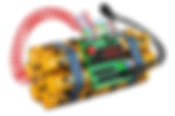
Situation "...A dirty bomb—or Radiological Dispersal Device (RDD)—is an improvised explosive device that combines conventional explosives (such as dynamite) with radioactive materials. Its primary purpose is to use a conventional blast to scatter toxic radioactive dust and shrapnel across a localized area to cause mass panic, economic disruption, and contamination..." - source: google.com ...owhh...!... Iran's corrupt programme of uranium enrichement may include the sale of weapons such as dirty bombs to militant groups via transiting through the North-South Trade Corridor in the Georgia-Caspian region. ...mmm... ...yeah... [ keystroke harassment ] [ human tissue theft arms ] ...going to need more than my gloves to clean that up...!... ... ...uh yeah... ...and handle... ...before explode... ...make safe... ...now how...!?... ... ...mmmm... [ human tissue theft : mouth left side ] -> NEED to develop optimal methods to "search and seize" such devices transported in vehicles throughout the Georgia-South Ossetia Region ...uh-huhh...!... -> NEED to use new scanning to detect ...like what...?... ... ...will find [my] isotope...!... ... ...which... ... ...uranium...[235]... ... ...and... ... ...uranium...[308]... ... ...and there are many other... ...like polonium... ... ...mmmmm... - the isotopes are radioactively toxic to humans ...make i/me sick... ...and me... ...then won't [attack or regulate] them... ...the de un smugglers... ...and gang...!... - source: females georgia territorial defense guard ? ... ...if we're calling it that...!.. ... ...mmmm... .. ...do... ... ...owhhh...!... -> NEED to use standard disposal method ...like what...?... ... ...in a ship at sea... ... ...put...!... ... ... ...and can be... ...[an artificial] lagoon... ...mmmm... ... ...only a bit... ...need it de un deep... ...at [20 meters]... ...mmm.. ... ...sh#t...!... ...do you/we whit...!... ... ...dump in any old bin....!... ...or what...!!?... ... ...will review... ... ...do... ...and done... [ right thigh tampering : inner leg ] [ right thigh tampering : inner leg ] [ right thigh tampering : inner leg ] - source: female ....mmmm.... ...and done... ... ...mmmmmm...!... DIRTY BOMB ( IMPROVISED DEVICE )