Exercise : Human Breathing Pattern Disorder Treatments
Situation
Comet Dust Elevated Affecting Human Respiration
"...The CODITA project was designed to answer two overarching questions: how much cosmic dust enters the Earth’s atmosphere every day, and what impact does the dust have throughout the atmosphere?
...Estimates of the rate of input of cosmic dust into the Earth’s atmosphere vary from about 3 to 300 tonnes per day, depending on how this is measured.
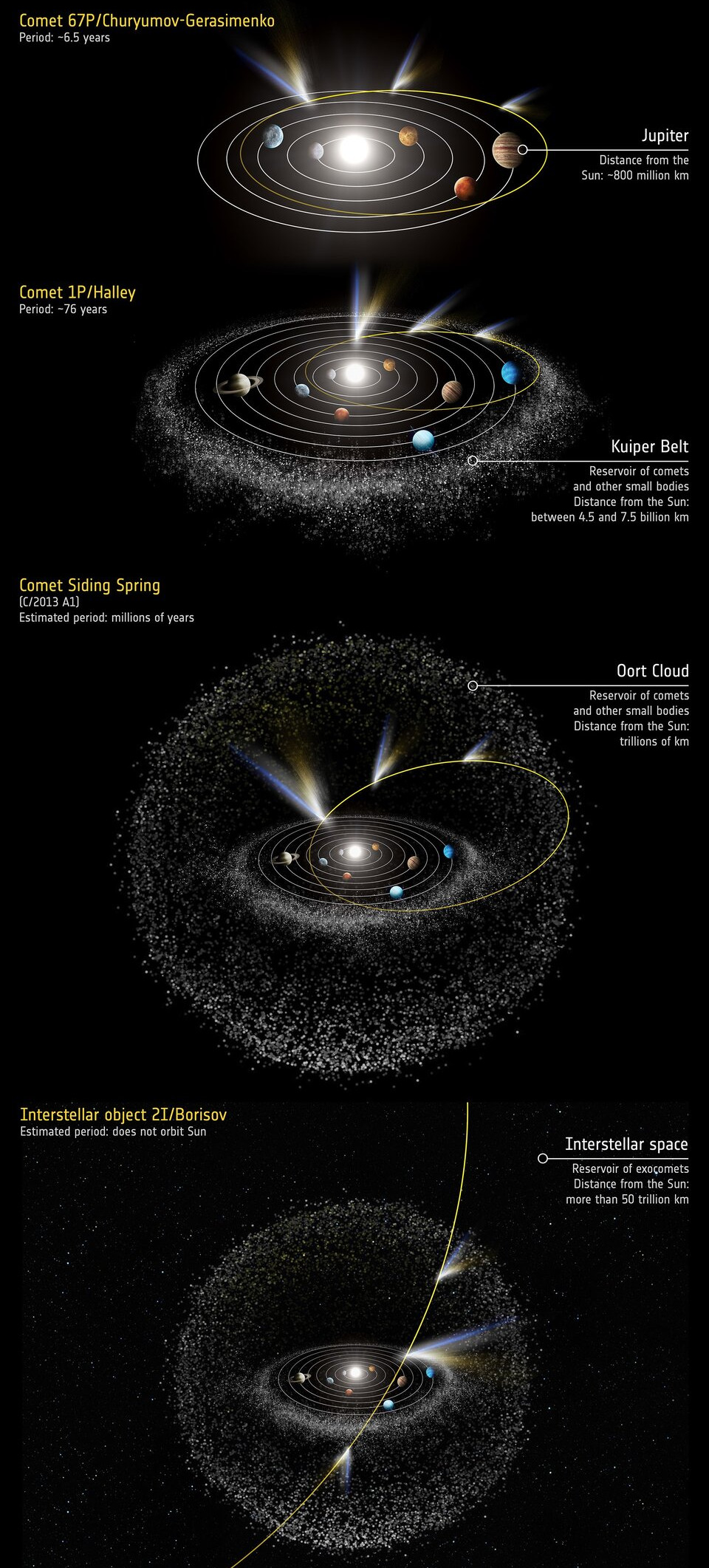
...the dust has several sources: Jupiter Family Comets, which are short-period comets captured by the gravitational field of Jupiter; longer period Halley Type and Oort Cloud Comets with periods from many decades to centuries; and the asteroid belt between Mars and Jupiter..."
- there are 4077 comets being officially comets tracked through the inner solar system...
- a comet tail contains: silica dust, organic dust, metal dust, ice particles...
source: google.com
...it does...
...
...
Treatments for Managing Breathing Pattern Disorder
The first step is education. Understanding how breathing works, what normal patterns are and how breathing patterns contribute to symptoms is essential.
Armed with that knowledge, the next step is awareness. It is important that people can tune in to their own body and become aware of their own breathing patterns at different times, but specifically when symptomatic.
...oh we're armed...!...
..until that improve...!..
...
...oh only some...
...speak for yourself...!...
...
..uh...
..huh...!...
Being aware of a dysfunctional breathing pattern helps in trying to establish a new functional pattern.
With knowledge and awareness, breathing retraining can begin. Typically, the focus is on three things with breathing: NOSE, LOW and SLOW. These self help videos support the advice below.
The NOSE is an essential part of the respiratory system and the aim is to manage nose breathing at all times (inhale and exhale) at rest. The nose functions to condition the air for the lungs - that is, it will warm the air, humidify it and filter (clean) it. It also sets up a natural resistance that helps the diaphragm to contract. Physiotherapy for Breathing Pattern Disorder provides a guide to breathing through your nose.
Which takes us to the next step: LOW. This means engaging in “belly” breathing. The diaphragm is our main breathing muscle and it contracts on inhalation, moving down into the abdominal cavity. To maintain abdominal pressures, the stomach muscles lengthen, causing the belly to expand outward - “belly breathing.” It is important that belly breathing is not confused with “big breathing”. Resting breathing volumes (tidal volume - the amount of air moved with each breath) is really quite small - only about 10% of full lung volume. It doesn’t take much effort or movement to perform resting belly breathing. Ideally, there is not a lot of chest expansion, or upward movement of the chest or shoulders.
The last thing to work on is SLOW breathing. The aim is to establish a breathing rate of 8-12 breaths per minute at rest. A slower breathing rate, typically, allows for a slower heart rate, which may be important for people with Long COVID experiencing high heart rates (including dysautonomia). To slow breathing down, the breath out (exhale) needs to be a little longer than the breath in (inhale). This doesn’t mean squeezing air out of the lungs using a forced exhale, rather the key is to encourage the body’s natural breathing rhythm. At rest, inhale is active - relying on the breathing muscles (diaphragm and intercostals) to draw air in. The result is that the air moves quickly into the lungs. The exhale at rest is passive, relying on the elastic recoil of the lungs and diaphragm. This results in a slower flow of air out, thus, taking longer to complete an exhale. Slower breathing (generally achieved by lengthening the exhale) can help lower heart rate, improve parasympathetic nervous system activity and facilitate relaxation. The Association of Chartered Physiotherapists in Respiratory Care provide advice on how to cope with feeling short of breath.
The British Lung Association highlights this longer exhale breathing, by encouraging people to imagine breathing around a rectangle. Once the relaxed tummy breathing technique is mastered, imagine or look at a rectangle. Follow the sides of a rectangle such as a book, door, TV or a picture on the wall with your eyes as you use relaxed tummy breathing. Gradually slow the speed at which your eyes move around the edge of the rectangle to slow your breathing.
STASIS provides a free breathwork programme for people living with Long COVID.
Physiotherapy for Breathing Pattern Disorders provides a free guide to help you recover from COVID-19.
World Physiotherapy provided a range of useful resources for #WorldPTDay 20201 available in nearly 60 different languages in their toolkit, including information sheets on Breathing Exercises.
Relaxation, nutrition, rest and sleep are all important aspects of managing breathing pattern disorders, with more information available from University Hospital Southampton NHS Foundation. Some ideas to reduce activity of the upper chest muscles, available on Physiopedia, include:
Sit in an armchair. Rest arms on armrests. During breath in (inhalation), lightly press down on arms (minimal force to be applied).
Interlock hands with palms facing upwards. On the breath in (inhalation), push finger pads together
Interlock the fingers behind the head in supine (ie beach pose)
Sit forward on a chair and let arms drop so palms are facing forward. On the breath in (inhalation), turn the palms out
Stand with hands in front of the body. Grasp wrist with other hand and pull very lightly on the wrist
Provincial Health Services Authority Canada provide symptom management facts sheets on “Breathlessness” in English, Punjabi, Tagalog, and Traditional Chinese.
To read a story (blog) by a Physiotherapist living with Long COVID experiencing breathing pattern disorder click here.
The information on this page was written by Physiotherapists living with Long COVID and respiratory Physiotherapists specialising in breathing pattern disorders.
-> NEED to test the efficacy of the physio treatments listed above...
...aye...do...!..
...if yer can...
...oh "yer"...not ye...!...
...
...uh-huhmm...!...
...huhmm...!...


Comments